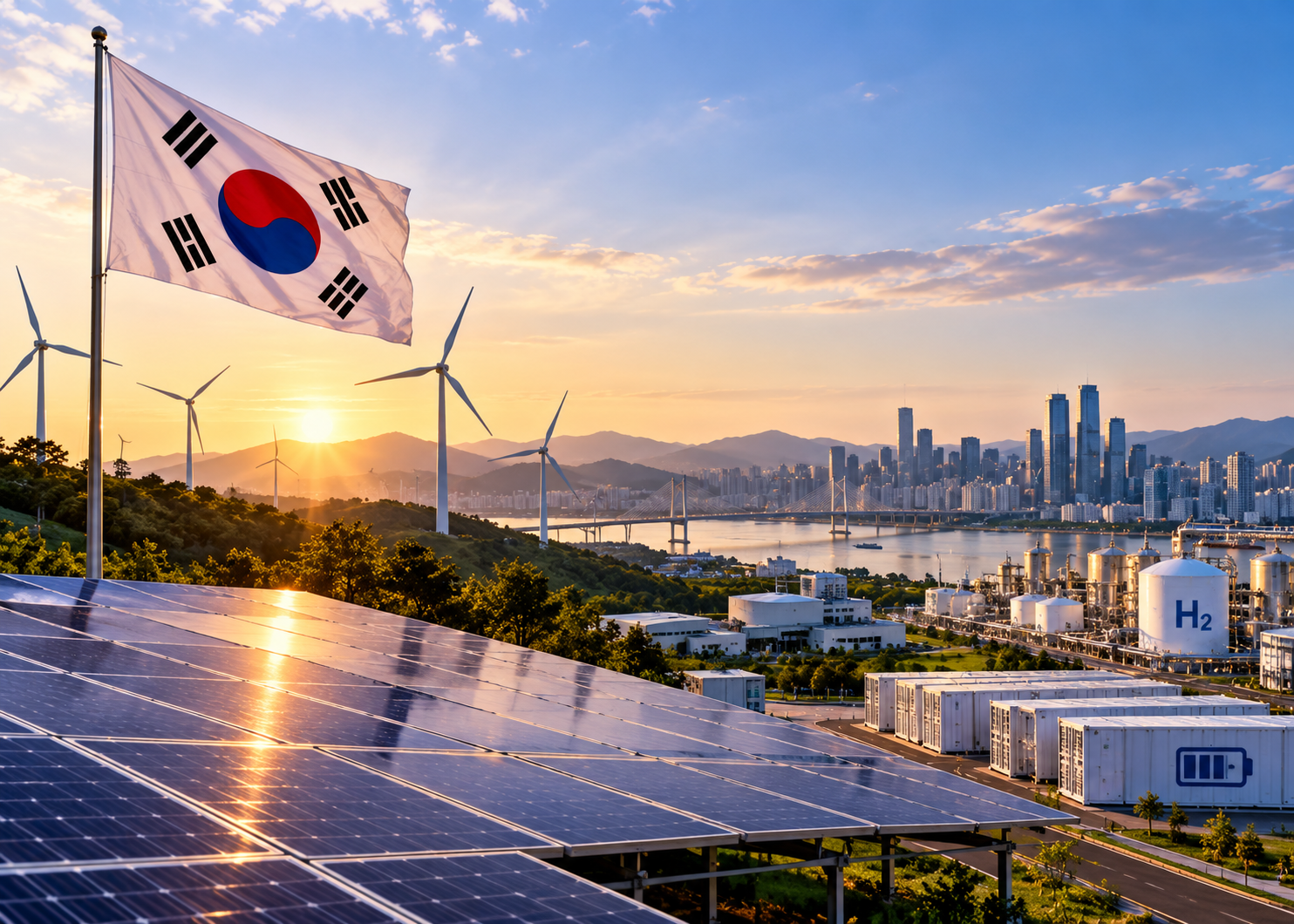
South Korea has unveiled a sweeping energy and industrial-transition program intended to mobilize approximately 1,000 trillion won, or $747 billion, through 2035.
The Korea-Green Transformation initiative, known as K-GX, combines government spending, climate finance and private-sector investment aimed at reducing emissions while expanding domestic clean-energy industries.
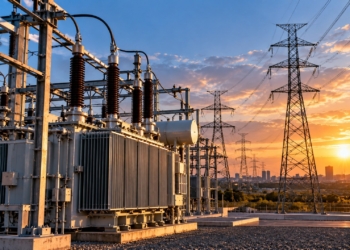
The government plans to secure 100 gigawatts of renewable-energy capacity by 2030 through additional solar and wind generation and expansion of the country’s electricity grid.
The strategy also targets some of South Korea’s most energy-intensive industries, including steel, petrochemicals, refining, cement, semiconductors and displays.
Investment will support technologies including advanced batteries, carbon capture, power semiconductors and other low-carbon industrial systems.
Electric and hydrogen-powered vehicles are targeted to account for more than 70% of new vehicle sales by 2035.
The program matters beyond South Korea because the country is a major producer of semiconductors, batteries, automobiles, ships and industrial materials.
Changes in the energy intensity and production methods of those sectors can therefore influence global manufacturing supply chains.
Execution will now be the central issue.
Mobilizing hundreds of billions of dollars over nearly a decade will require substantial private-sector participation, expansion of the electricity grid and commercially viable low-carbon technologies.
For investors, K-GX establishes a long-duration policy framework spanning electricity infrastructure, industrial equipment, batteries, transportation and renewable generation.