The Reserve Bank of India raised its benchmark interest rate by 25 basis points Wednesday, delivering the country’s first increase in nearly four years as policymakers respond to stronger inflation pressure and elevated global energy costs.
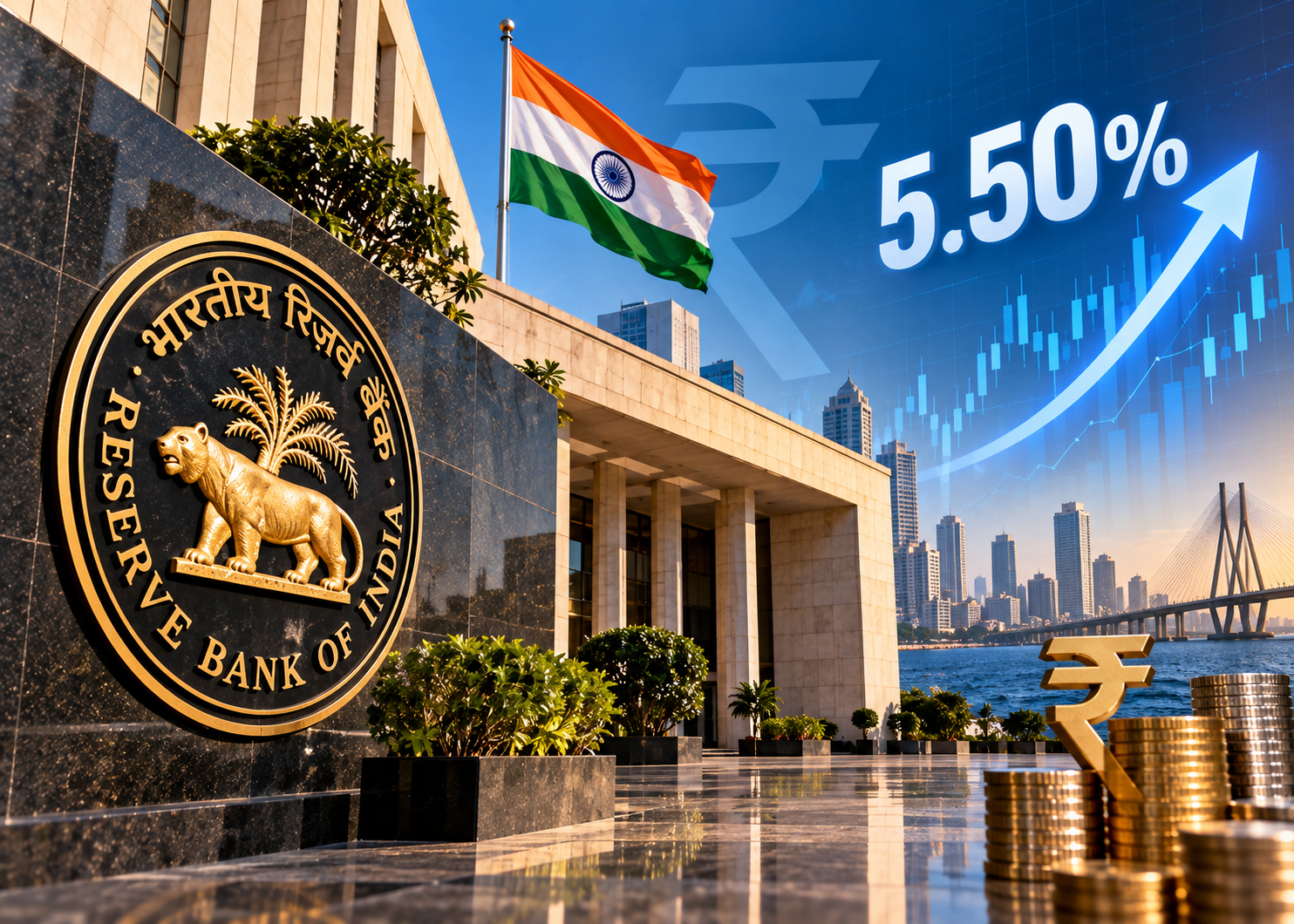
The Monetary Policy Committee unanimously increased the repo rate to 5.50%.
The RBI also changed its policy stance from “neutral” to “calibrated tightening,” an important signal that Wednesday’s increase may not be an isolated move.
The decision comes as India confronts a difficult combination of higher commodity prices, currency pressure and still-strong domestic growth.
The central bank expects inflation to average about 5.8% over the next three quarters while forecasting economic growth of approximately 7.1% for the fiscal year.
That resilience gives policymakers more room to address inflation without immediately threatening a severe slowdown.
Currency markets nevertheless delivered a warning.
The rupee weakened toward its record low even after the rate increase, trading around 96.8450 per dollar. The currency has been pressured by expensive imported oil, rising U.S. yields and foreign portfolio outflows.
India’s foreign-exchange reserves have also fallen roughly $50 billion from their September peak as the RBI intervenes in currency markets.
Liquidity is another important component of the policy shift.
India’s banking system continues to hold a large cash surplus, although Governor Sanjay Malhotra expects that excess liquidity to decline toward the end of the financial year as the RBI uses bond sales, foreign-exchange operations and other instruments to absorb funds.
For markets, the key change is that India’s tightening cycle is no longer a forecast.
The question now is how far the RBI must go.
If energy prices and broader inflation remain elevated, additional increases could follow. A faster tightening cycle could eventually support the rupee, but it would also raise borrowing costs across one of the world’s fastest-growing major economies.