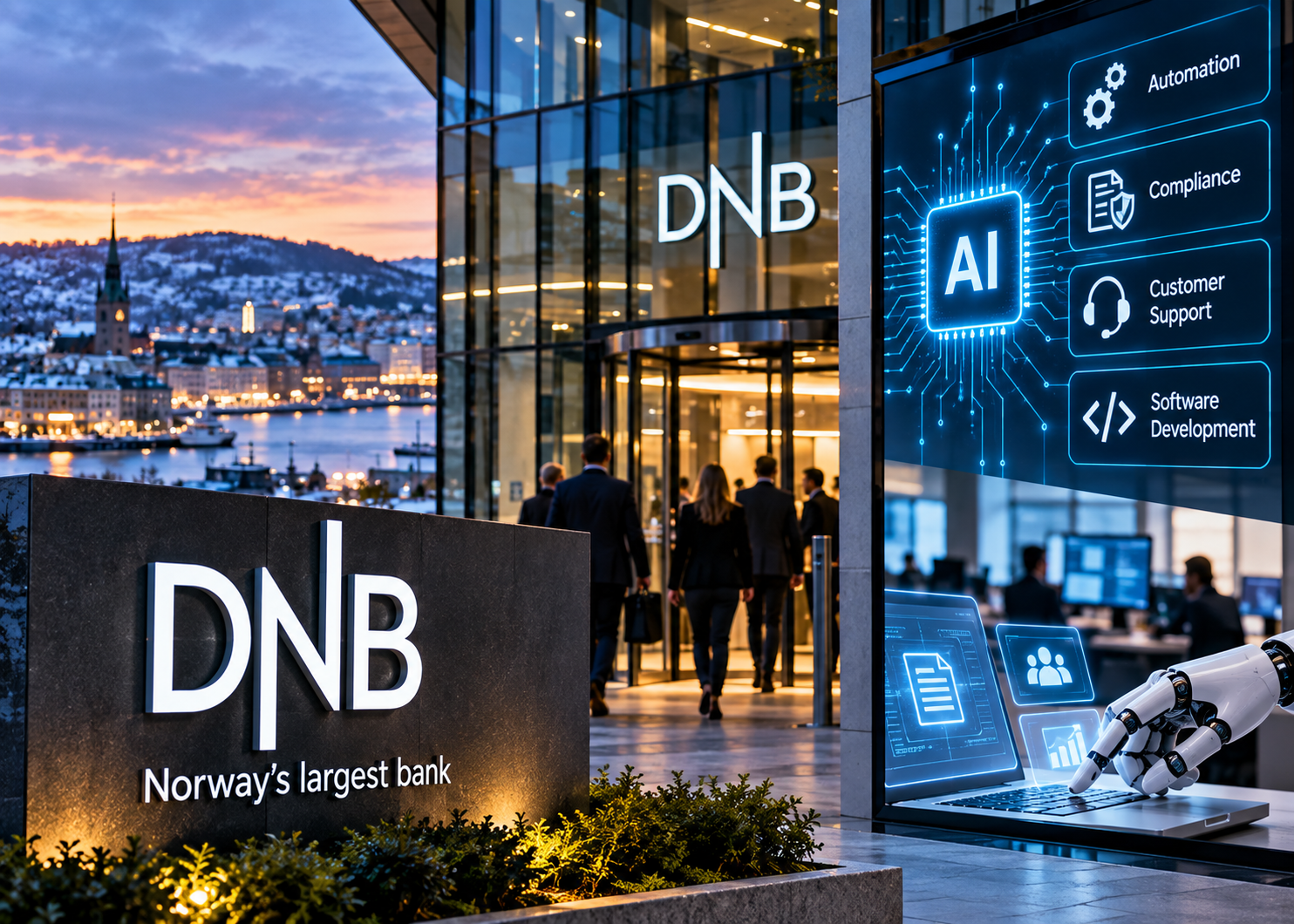
Norway’s largest bank, DNB, plans to eliminate approximately 400 positions from its Technology & Services operation as investments in AI agents and digital automation reshape its workforce.
The bank says artificial intelligence is increasingly handling tasks that previously required manual work, including customer-data controls, know-your-customer processes, technology development and coding.
DNB expects the workforce reduction to be completed during the fourth quarter of 2026.
The announcement provides a concrete example of the transition from corporate experimentation with generative AI toward direct changes in staffing and operating structures.
Banks have been particularly active adopters because large parts of their operations involve document processing, compliance checks, customer servicing, software development and other structured workflows where automation can potentially reduce costs.
DNB said it is already seeing efficiency improvements from the technology.
The reduction is concentrated in technology and services rather than representing a uniform cut across the entire bank.
That distinction is important because some of the jobs exposed to the restructuring are themselves technology-related positions — evidence that AI automation is beginning to affect not only traditional back-office functions but also parts of software and technology operations.
For the banking sector, the next question is whether similar efficiency programs spread from individual tasks into broader organizational redesign.
If they do, AI spending could increasingly be evaluated not simply through new products and customer features but through measurable changes in headcount, operating expenses and productivity.