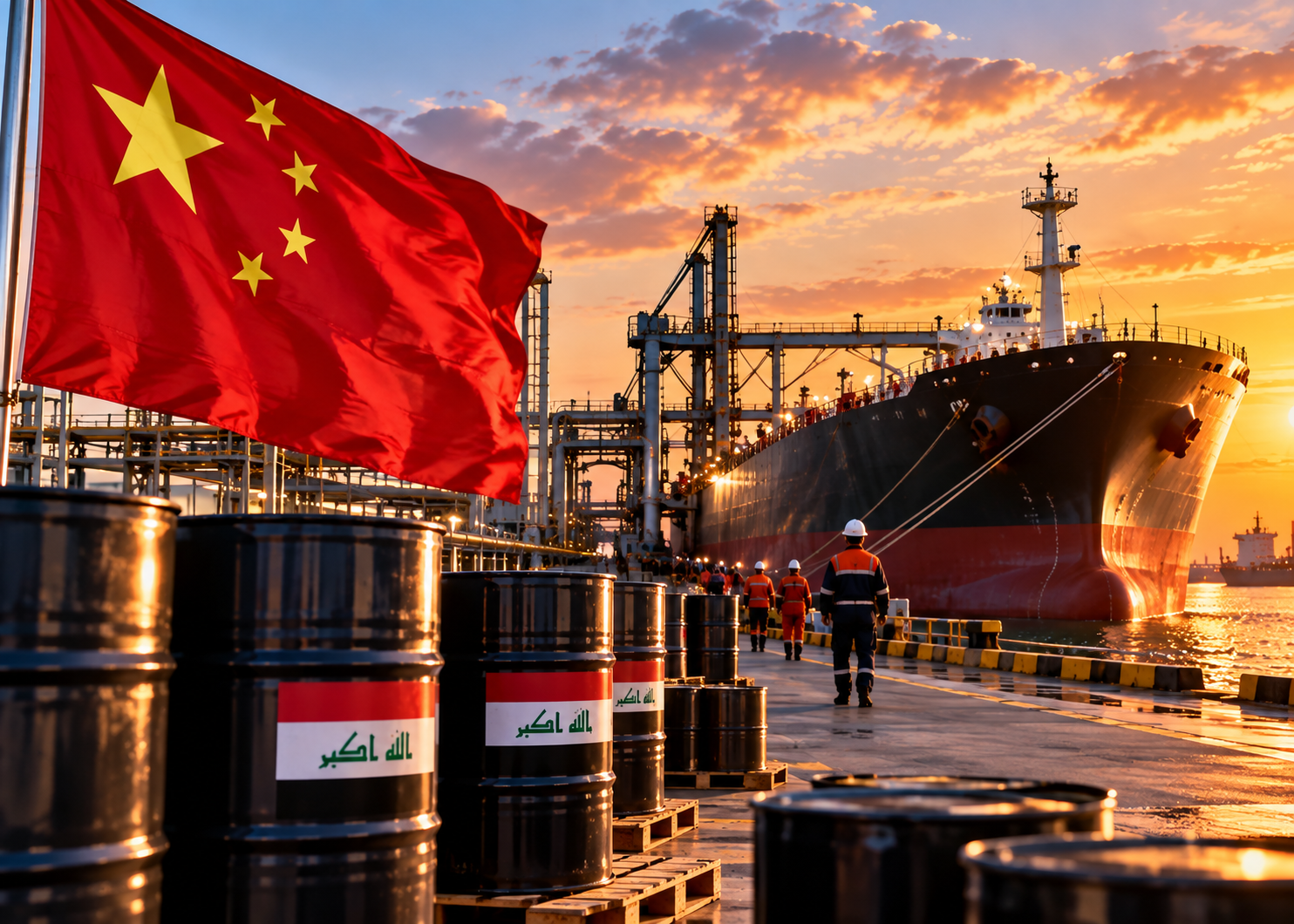
Chinese independent refiners are sharply increasing purchases of Iraqi crude as reduced Iranian supplies force buyers to reorganize one of Asia’s most important oil-import channels.
The refiners have purchased at least 12 million barrels — and potentially as much as 20 million barrels — of primarily Iraqi and Qatari crude for October and November delivery.
Most of the purchases involve Iraq’s Basra Medium and Basra Heavy grades. Additional transactions include about 3 million barrels of Qatar’s al-Shaheen crude for early-November arrival.
The shift follows a dramatic decline in Iranian supply to China.
Chinese imports of Iranian crude fell to roughly 590,000 barrels per day in September, about half their year-earlier level and the lowest since January 2023.
Iranian crude held in floating storage outside the blockade zone has also fallen sharply, from about 100 million barrels in late July to approximately 45 million barrels.
The change matters because China’s independent refiners have historically been major buyers of discounted Iranian crude.
Replacing those barrels with Iraqi and Qatari supply changes both the cost and logistics of their feedstock.
The replacement cargoes were sold at premiums of approximately $12 to $20 a barrel over ICE Brent on a delivered basis.
That pressure is already visible in China’s Shandong refining hub, where operators face higher crude costs while domestic fuel-price controls restrict their ability to fully pass those costs through to customers.
Refinery utilization in Shandong fell to roughly 55% by the end of September from nearly 60% at the beginning of the month as margins deteriorated.
For global markets, China’s pivot demonstrates how the Iranian supply disruption is redistributing barrels rather than simply reducing demand.
Iraq and other Gulf producers are gaining additional Chinese business while refiners absorb higher acquisition costs.
A prolonged shift could strengthen demand for Iraqi crude while increasing competition for Middle Eastern barrels already needed by buyers elsewhere in Asia.