
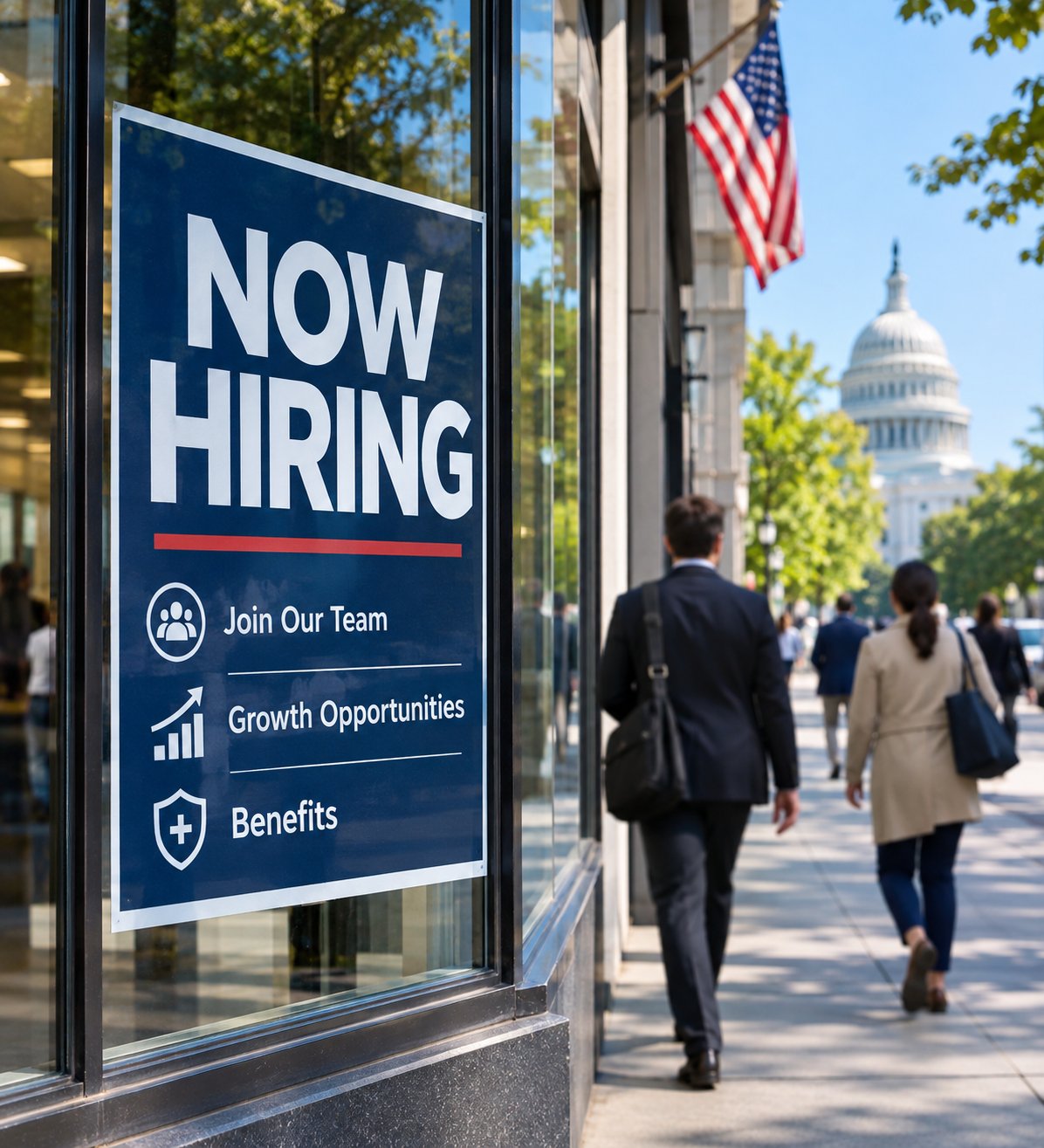
U.S. job openings increased to 7.523 million in September, exceeding economists’ expectations and providing fresh evidence that labor demand remains resilient despite elevated interest rates and persistent inflation.
The Bureau of Labor Statistics reported Tuesday that vacancies rose by 333,000 from August’s upwardly revised 7.190 million. Economists had expected approximately 7.1 million openings.
The job-openings rate increased to 4.5% from 4.3%. However, the Labor Department characterized the overall change in openings as little changed, highlighting the importance of distinguishing the numerical increase from its statistical significance.
Other measures showed improvement.
Voluntary quits climbed to 3.365 million, lifting the quits rate to 2.1% from 1.9%. Layoffs and discharges totaled approximately 1.641 million, while hiring reached 5.402 million.
The combination suggests a labor market in which employers are maintaining demand for workers and layoffs remain relatively contained, even though hiring activity has been subdued compared with earlier expansion periods.
The report also carries implications for monetary policy.
Federal Reserve officials are assessing whether labor-market conditions justify additional tightening as inflation remains above the central bank’s target. Stronger labor demand could provide policymakers with more flexibility to maintain restrictive interest rates.
Treasury yields moved higher following the release, with the benchmark 10-year yield reported around 4.96% during Tuesday’s trading.
Nevertheless, job openings alone do not establish how quickly employment or wages will grow.
The next major labor-market test will be Friday’s October employment report. Investors will focus on payroll growth, unemployment and wage pressure to determine whether September’s improvement in vacancies reflects a broader stabilization in labor demand.
…
That’s the story. … Thank you for listening to Cedar Global Markets. We’re supported by our partners, and you can learn more about the partner featured on this page. We’ll see you next time.