
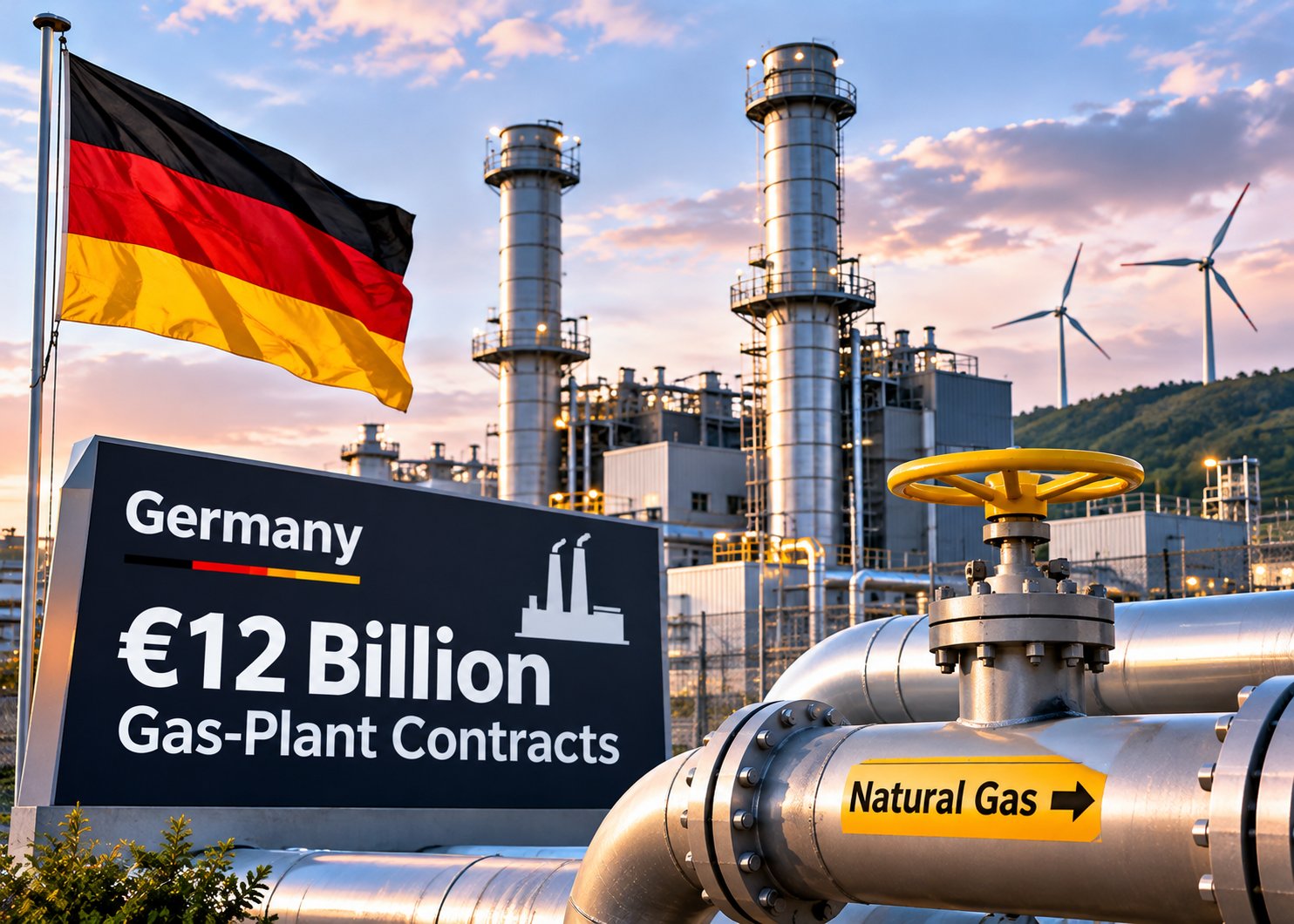
Germany has awarded approximately €12 billion of contracts for new gas-fired power capacity as Europe’s largest economy builds additional backup generation to support an electricity system increasingly dependent on renewable energy.
The first tender awarded approximately 5.16 gigawatts of capacity across 11 projects. RWE and LEAG were the principal winners, with RWE securing contracts for three new plants totaling approximately 2.1 GW.
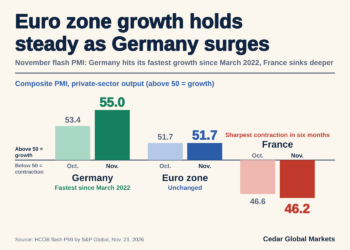
The plants are intended to supply electricity when wind and solar generation cannot meet demand. That reliability function is becoming increasingly important as Germany expands renewable generation while retiring conventional coal-fired capacity.
RWE’s three hydrogen-compatible plants will be located at Voerde, Weisweiler and Werne in North Rhine-Westphalia. The company says construction of its first project could begin within weeks.
Operators will receive payments for making capacity available over a 15-year period. The plants are expected to support Germany’s electricity system from 2031.
The program highlights one of the central challenges of the energy transition: adding large quantities of renewable generation does not eliminate the need for dispatchable power that can operate when weather-dependent generation falls.
Germany therefore faces a balancing act. It wants to phase down coal and reduce long-term emissions while simultaneously investing billions in flexible generation needed to maintain grid reliability.
Additional tender rounds are expected as Germany builds out the capacity required to support its transition away from coal.
…
That’s the story. … Thank you for listening to Cedar Global Markets. We’re supported by our partners, and you can learn more about the partner featured on this page. We’ll see you next time.