
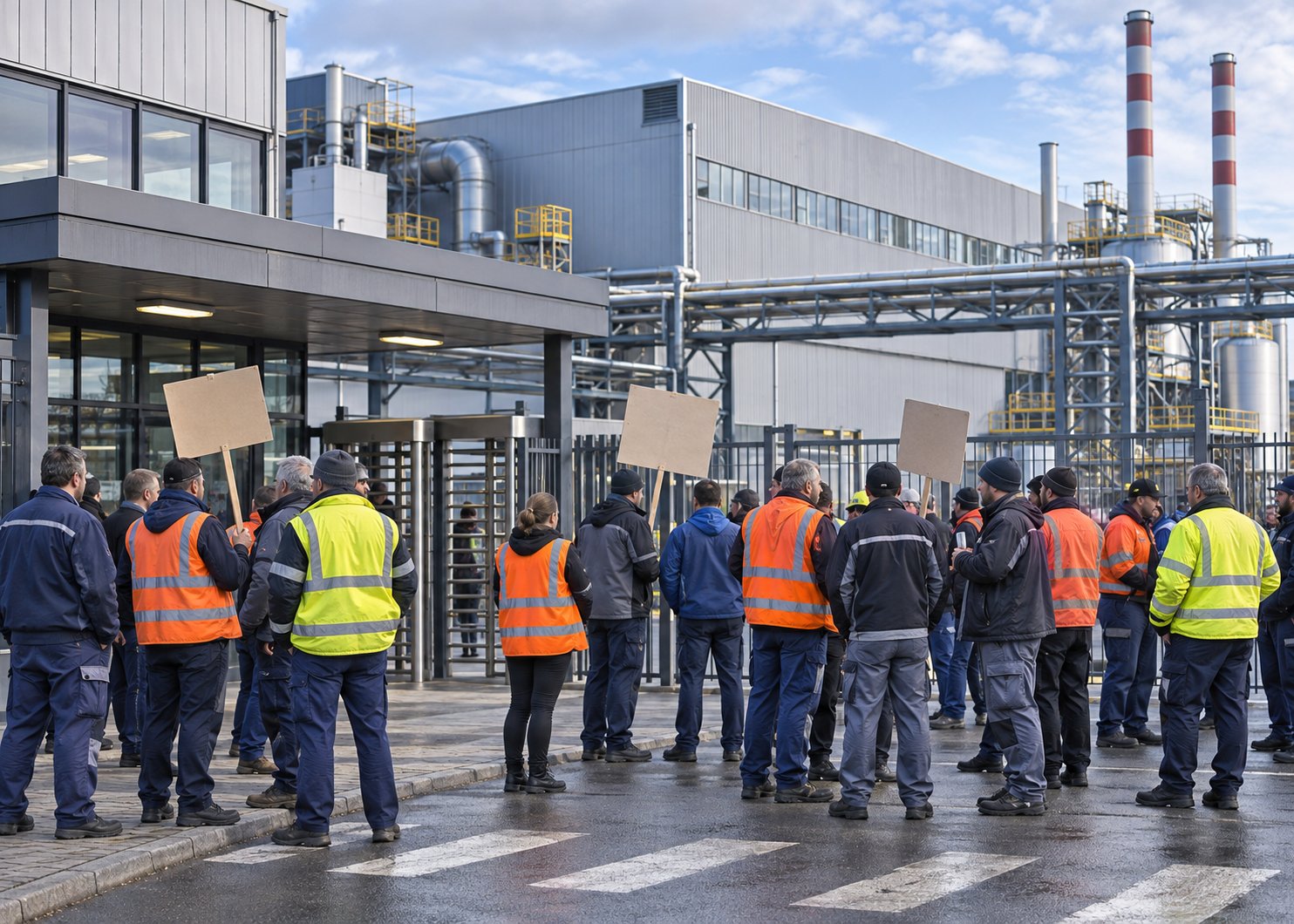
Workers across Germany’s engineering industry have begun temporary warning strikes after wage negotiations failed to produce an agreement, opening a new labor dispute involving approximately 3.7 million employees.
The first walkout began around midnight at Thyssenkrupp’s Rasselstein operation, where roughly 300 employees and workers from surrounding companies participated.
IG Metall is seeking a 5% wage increase over 12 months.
Employers have proposed a one-time payment equal to 1% of annual gross salary during the summer of 2027 followed by a 1.3% wage increase beginning in July 2028.
The union rejected the proposal and said additional warning strikes would follow across several German states, including Hesse, Rhineland-Palatinate, Saarland and Thuringia.
The dispute arrives at a difficult time for German industry.
Manufacturers are already dealing with pressure from the country’s automotive downturn, elevated energy costs and structural challenges affecting Europe’s largest economy.
Germany’s engineering and metalworking industries occupy important positions in European manufacturing supply chains, meaning a prolonged labor dispute could eventually affect industrial production if temporary warning strikes escalate.
For now, the actions remain limited warning strikes rather than an industry-wide shutdown.
The next negotiations will determine whether employers improve their wage proposal or whether IG Metall expands the industrial action.
…
That’s the story. … Thank you for listening to Cedar Global Markets. We’re supported by our partners, and you can learn more about the partner featured on this page. We’ll see you next time.