
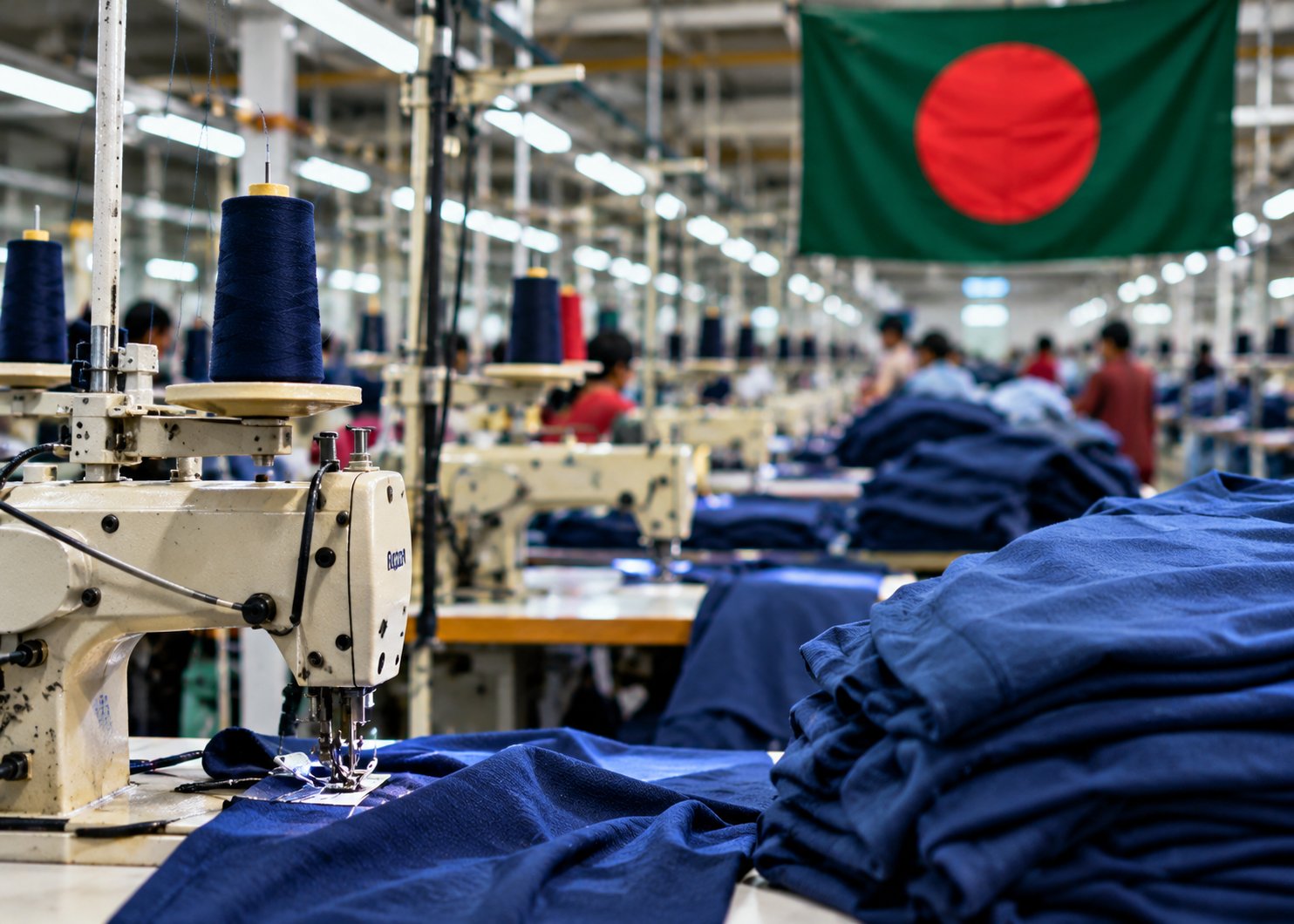
Bangladesh has established a new wage board for its garment industry after worker protests forced more than 500 factories to close, escalating a labor dispute in one of the world’s most important apparel-exporting economies.
Workers are demanding that the minimum monthly wage increase to 30,000 taka, or about $245, from the current 12,500 taka.
The unrest has affected Bangladesh’s principal industrial regions, including Dhaka, Gazipur and Ashulia.
According to the Bangladesh Garment Manufacturers and Exporters Association, 529 factories have been forced to shut and 987,190 workers have been left temporarily out of work.
The government responded by establishing a six-member wage board consisting of representatives from workers, employers and the government, along with an independent member. The board will review compensation across the garment sector and recommend revised wage levels.
The dispute has broader economic implications because garment manufacturing employs approximately 4 million people, generates more than 80% of Bangladesh’s export earnings and contributes roughly 10% of gross domestic product.
Bangladesh is the world’s second-largest ready-made garment producer after China and supplies clothing to major international retailers.
Manufacturers are already facing rising production costs, intermittent gas and electricity shortages and higher energy expenses.
Government officials have warned that prolonged factory closures could delay export shipments and payments from overseas customers.
The immediate question is whether creation of the wage board is enough to bring employees back to work while negotiations continue. If disruptions persist, the dispute could begin affecting international apparel supply chains and Bangladesh’s export revenue.
…
That’s the story. … Thank you for listening to Cedar Global Markets. We’re supported by our partners, and you can learn more about the partner featured on this page. We’ll see you next time.