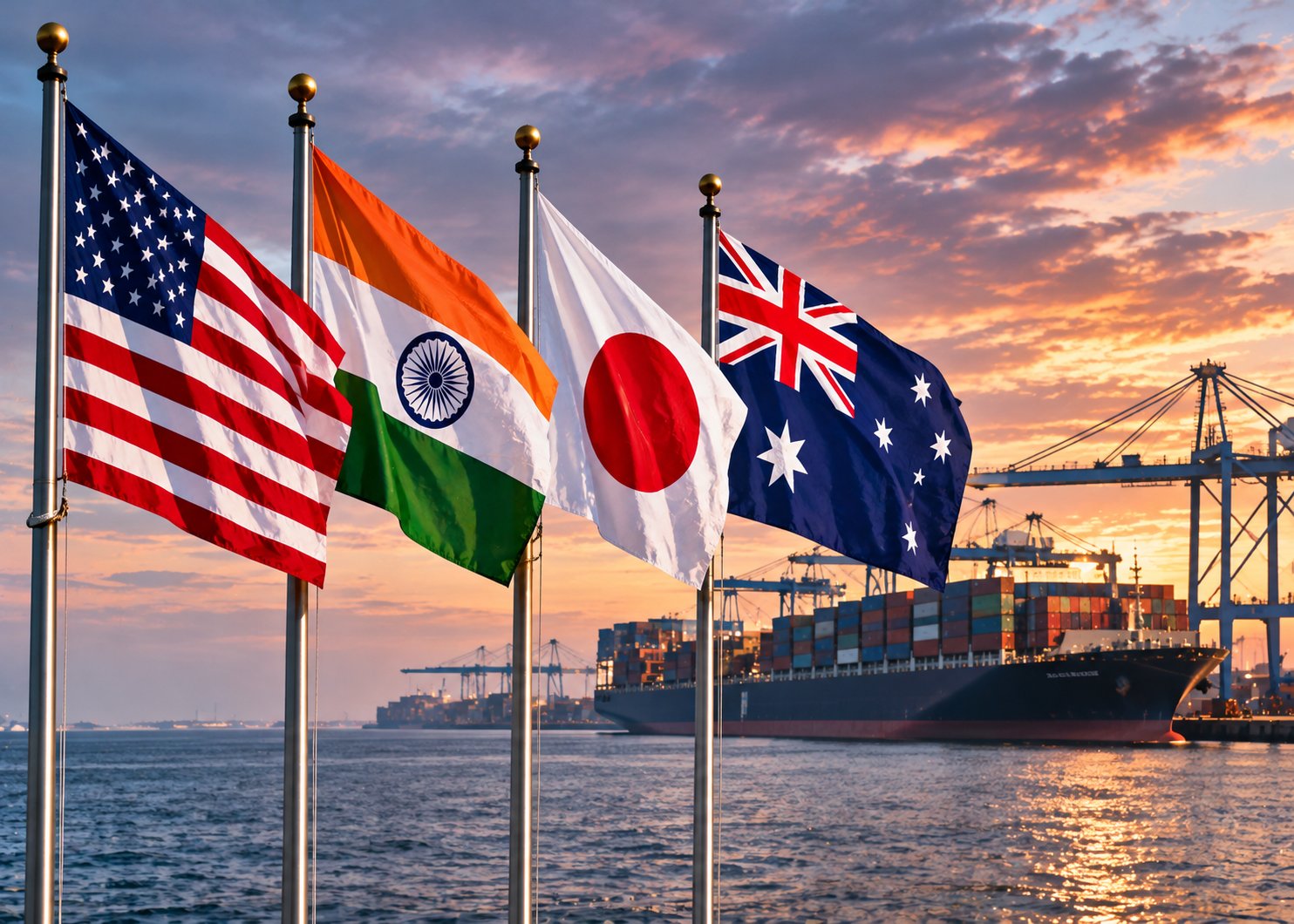
The United States, India, Japan and Australia agreed Saturday to strengthen cooperation on global supply chains while raising concerns about economic coercion and export restrictions that can disrupt strategically important industries.
Foreign ministers from the four Quad countries said they support reliable and open supply chains and expressed concern over arbitrary export restrictions and non-market practices that contribute to industrial overcapacity. Reuters reported the ministerial meeting Saturday.
The joint statement did not name China.
The economic language nevertheless comes as access to strategically important raw materials has become an increasingly important element of Indo-Pacific economic policy.
Supply-chain resilience has moved beyond traditional trade policy as advanced economies compete for semiconductors, critical minerals, energy infrastructure and other inputs essential to manufacturing and technology.
Restrictions affecting those materials can alter production costs, redirect investment and encourage governments and companies to diversify sourcing.
The ministers also emphasized the importance of protecting navigation through major international shipping corridors, connecting the Quad’s economic-security agenda with global energy and trade flows.
The meeting comes ahead of a planned Quad leaders’ meeting in Manila.
The next test will be whether the four governments convert their supply-chain commitments into specific financing, sourcing or investment initiatives.
For markets, implementation matters more than diplomatic language. New arrangements involving critical minerals, manufacturing capacity or transportation corridors could influence where companies locate production and how they manage geopolitical supply risk.
…
That’s the story. … Thank you for listening to Cedar Global Markets. We’re supported by our partners, and you can learn more about the partner featured on this page. We’ll see you next time.