
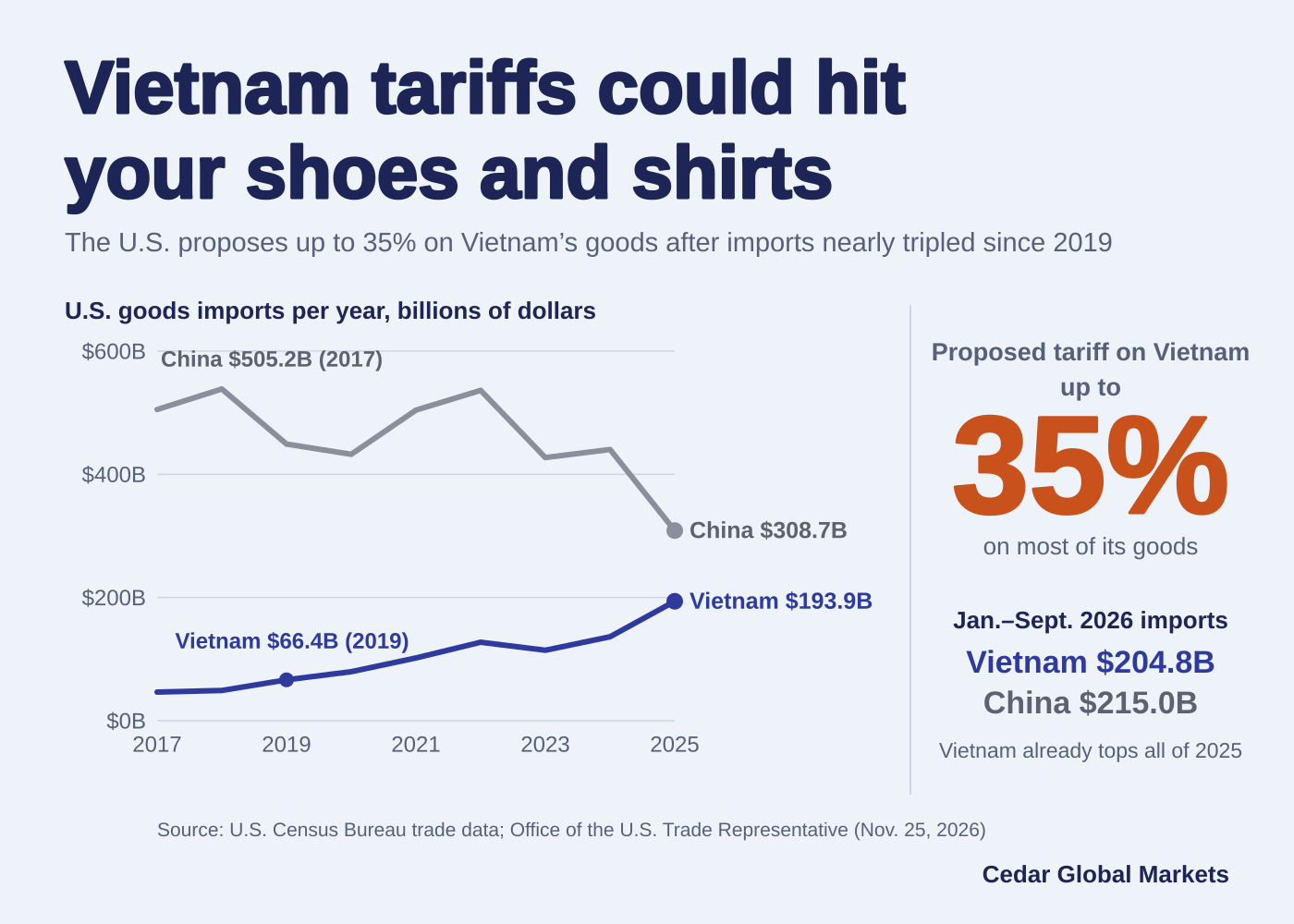
For years, the advice to American companies worried about tariffs on China was simple: move production to Vietnam. Many did. Now Vietnam tariffs of up to 35 percent on nearly all its goods are part of the new Section 301 plan the Trade Representative released on Wednesday for 14 economies, the highest rate in the agency’s announcement. For shoppers, that is the part of the story to watch.
The shift has been enormous. Census Bureau figures show the U.S. imported $66.4 billion of goods from Vietnam in 2019. In the first nine months of 2026 alone, it imported $204.8 billion, more than in all of 2025. Imports from China moved the other way, from $440.3 billion in 2024 to $308.7 billion in 2025 and $215.0 billion in the first nine months of this year. Vietnam is now almost level with China as a supplier.
The Trade Representative’s office says Vietnam’s practices hurt U.S. commerce especially in textiles, apparel and footwear. Those are everyday purchases: sneakers, jeans, kids’ clothes. And the other low-cost places a company might move next are on the same list. Bangladesh, Cambodia and Indonesia face proposed rates of up to 18 percent, and the agency singles out garments, apparel or textiles there too.
Who pays? A study from the Kiel Institute for the World Economy, which looked at more than 25 million shipments worth nearly $4 trillion, found that foreign exporters absorbed only about 4 percent of the cost of U.S. tariffs. The rest fell on American importers and their customers.
There is still time. These rates are proposals, not taxes in force. Written comments are due Jan. 5, and hearings begin Jan. 25. Vietnam could get a lower 20 percent rate if it reaches a trade agreement that answers the government’s findings. None of these new tariffs will reach the register this holiday season.
But families who budget for spring shoes and back-to-school clothes should know what is on the table. A tariff meant to stop factories from dodging the last tariff may end up charging the same shopper twice.
…
That’s the story. … Thank you for listening to Cedar Global Markets. We’re supported by our partners, and you can learn more about the partner featured on this page. We’ll see you next time.