
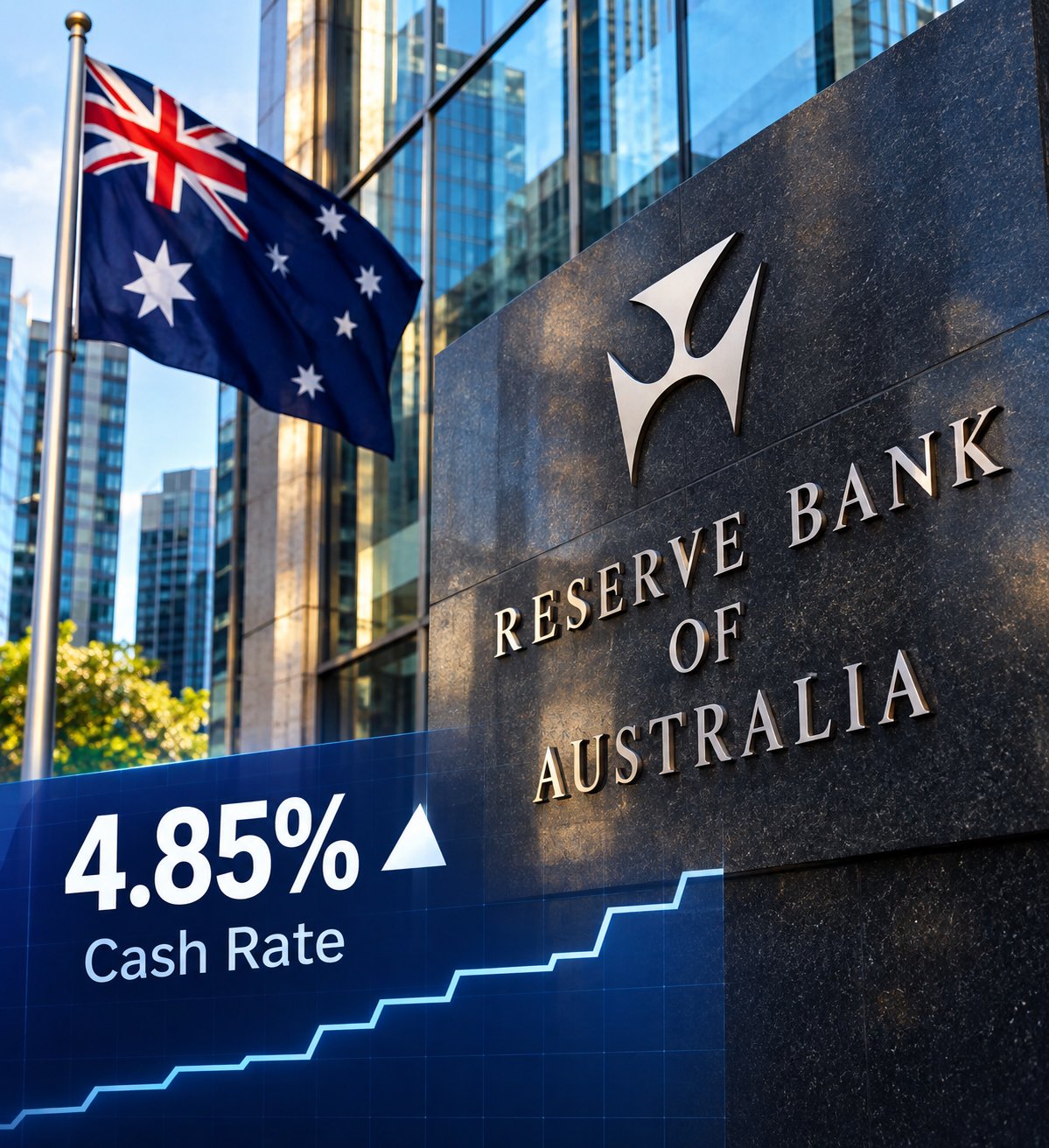
Australia’s central bank raised interest rates Tuesday for the fifth time this year, taking the cash rate to its highest level in 18 years while signaling that its tightening cycle may be approaching a pause.
The Reserve Bank of Australia increased its cash-rate target by 25 basis points to 4.85%, effective November 4. The decision followed September’s increase to 4.60%.
The November decision was less unified than the previous increase. The Monetary Policy Board voted 6–3 for the hike, with three members preferring no change. The RBA also removed previous language explicitly referring to potentially increasing the cash rate further.
Markets interpreted the change as a sign that another increase is not assured. The Australian dollar slipped about 0.3% following the announcement, while markets moved toward expecting the RBA to remain on hold at its December meeting.
The rate increase nevertheless reflects persistent inflation pressure. Australia’s inflation rate remains above the RBA’s 2%–3% target range, forcing policymakers to balance elevated prices against signs of weakening economic activity and a softer labor market.
The key question now is whether 4.85% represents the peak of Australia’s 2026 tightening cycle. After five increases this year, the December meeting will provide the next major signal about whether policymakers believe rates are finally restrictive enough to bring inflation sustainably back toward target.
…
That’s the story. … Thank you for listening to Cedar Global Markets. We’re supported by our partners, and you can learn more about the partner featured on this page. We’ll see you next time.