
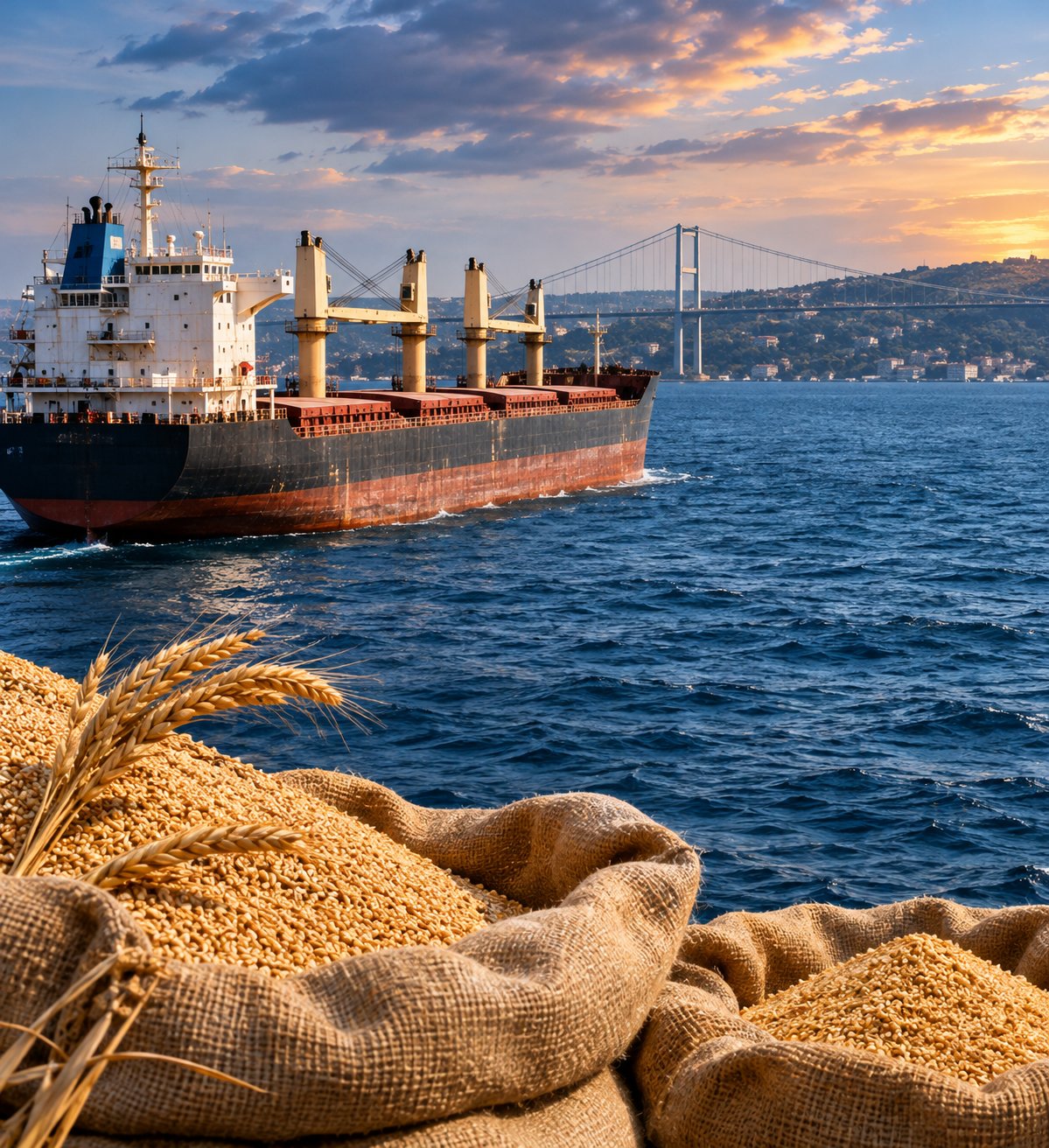
The United States says international interest is growing in a limited ceasefire in the Black Sea that would allow Russian and Ukrainian grain and energy shipments to move without obstruction, creating a potential pathway to ease pressure on global commodity trade without requiring a broader settlement of the war.
U.S. Secretary of State Marco Rubio said Saturday that Washington is examining proposals from Turkey and India aimed at restarting grain shipments through the region.
The proposal is deliberately narrower than a general ceasefire. The objective is to address disruptions affecting trade flows and reduce risks to global food and energy security while the broader Russia-Ukraine conflict continues.
The Black Sea is a critical export corridor for agricultural commodities from both Russia and Ukraine. Interruptions to commercial shipping can affect grain availability and transportation costs far beyond the region, particularly for import-dependent economies.
A functioning agreement could therefore have consequences beyond diplomacy. More predictable shipping would reduce one source of uncertainty surrounding grain supplies and could improve the reliability of commodity flows from the region.
The proposal remains preliminary. No Black Sea ceasefire agreement between Russia and Ukraine has been announced.
Markets will need to watch whether discussions advance into negotiations accepted by both combatants, which shipping routes and commodities would be covered, and whether any arrangement includes a monitoring or enforcement mechanism.
Until those elements exist, the significance lies in the emergence of a specific diplomatic effort centered on restoring trade rather than evidence that Black Sea commerce has already normalized.
…
That’s the story. … Thank you for listening to Cedar Global Markets. We’re supported by our partners, and you can learn more about the partner featured on this page. We’ll see you next time.