
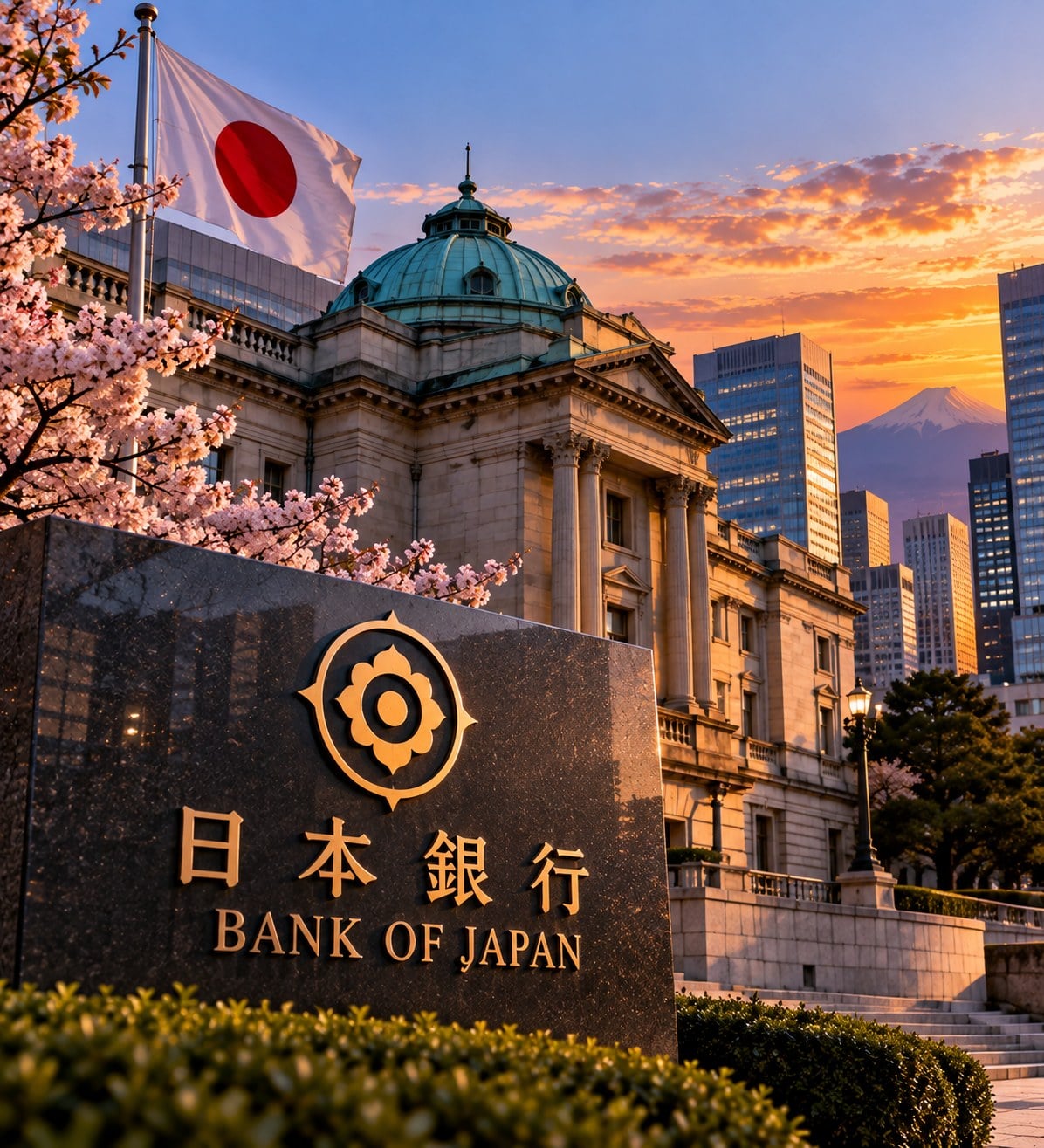
The Bank of Japan kept its benchmark policy rate unchanged at 1.25% Friday but delivered a more hawkish message as policymakers continued moving away from decades of extraordinary monetary stimulus.
The decision passed by an 8-1 vote, with board member Hajime Takata favoring an increase to 1.5%. The BOJ’s official guidance continues to target the uncollateralized overnight call rate at around 1.25%.
The central bank also accelerated the unwinding of assets accumulated during its long period of monetary easing. Annual exchange-traded-fund sales will increase from approximately ¥330 billion to ¥860 billion, beginning in January 2027. At the new pace, disposing of the holdings would still take roughly 43 years.
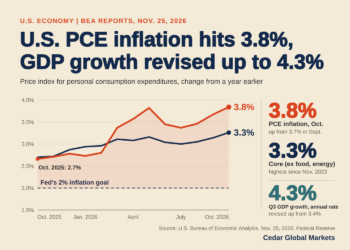
The shift reinforces expectations that Japan’s monetary policy is entering a new phase in which policymakers are increasingly focused on preventing inflation from becoming entrenched above target rather than trying to generate inflation.
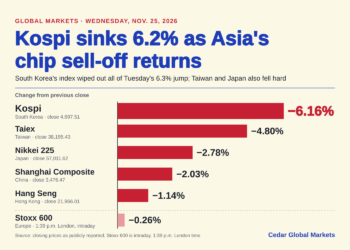
For global markets, the transition matters well beyond Japan. Higher Japanese interest rates can influence government-bond yields, the yen and international capital flows after decades in which extremely low Japanese borrowing costs helped finance investments around the world.
The next major test comes at the BOJ’s December meeting, when investors will watch whether the central bank’s increasingly hawkish stance translates into another rate increase.
…
That’s the story. … Thank you for listening to Cedar Global Markets. We’re supported by our partners, and you can learn more about the partner featured on this page. We’ll see you next time.